Create Journey
We will first create the Journey flow, then add the content for each message.
Create a Journey
Create a Journey Manually
Navigate to Journey Management -> Journeys and click on Create Journey.
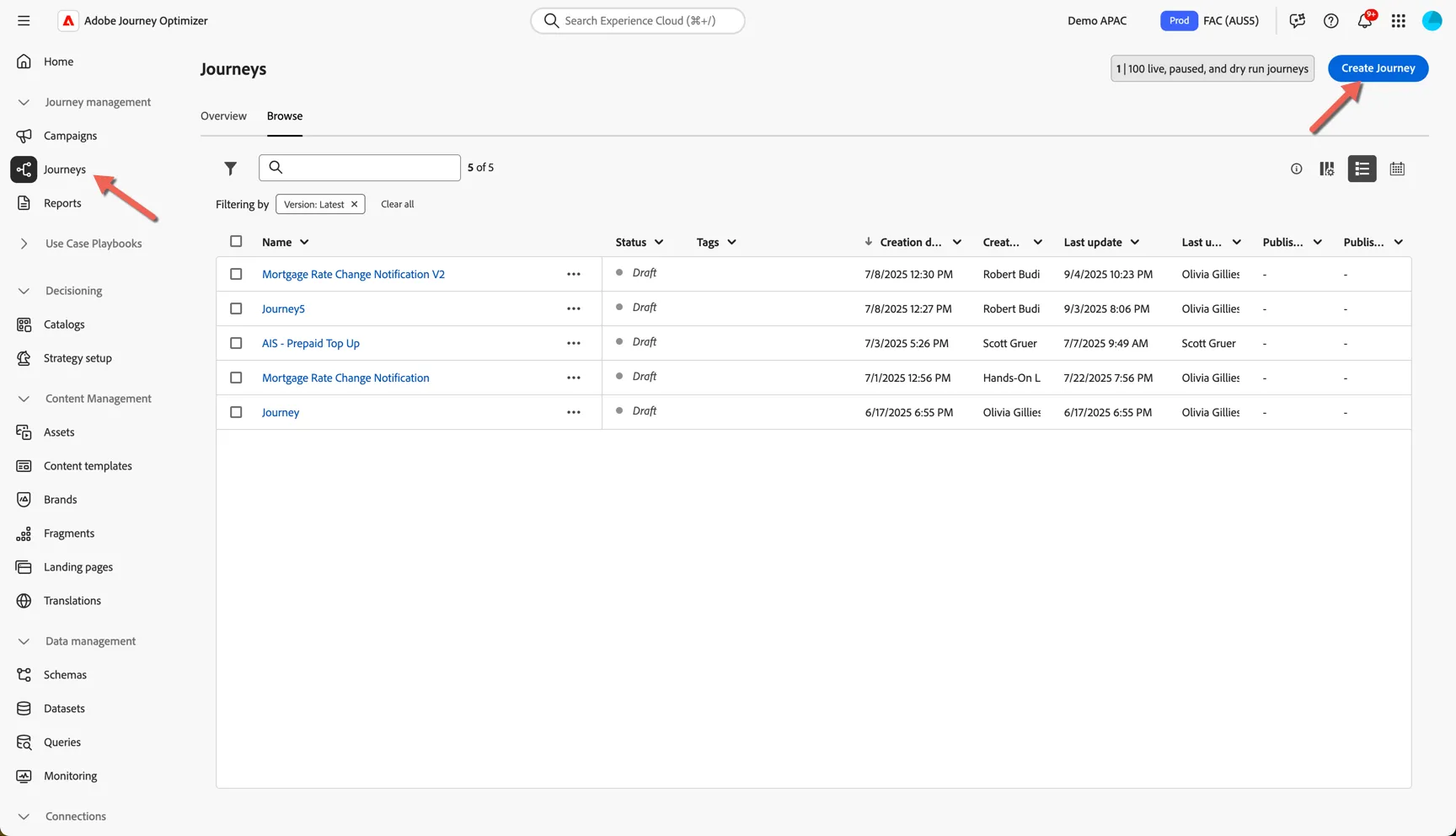
If proposed, select Create from scratch
Give your journey a name, add your initials so you can recognise it from other lab participants.
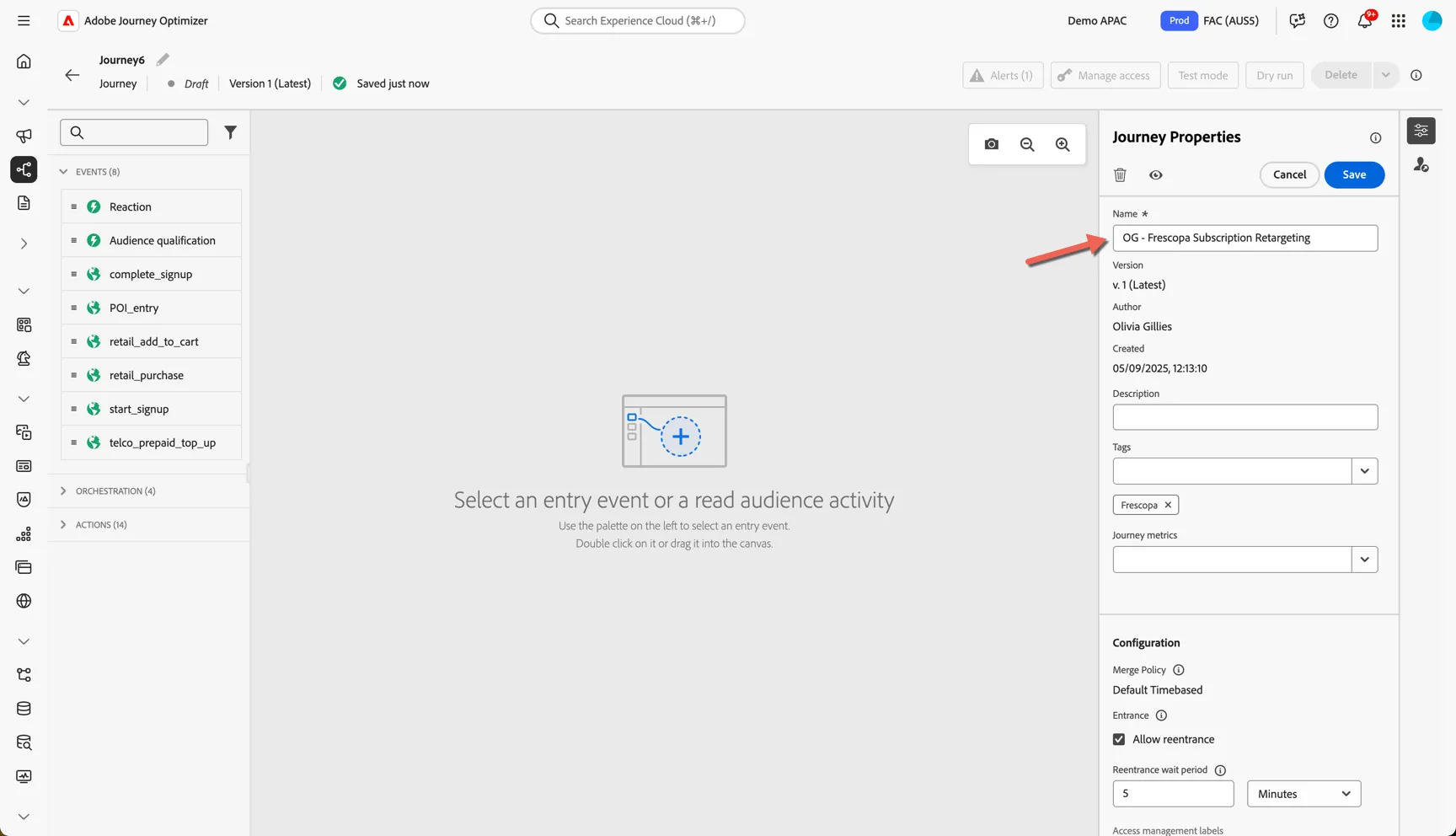
Measurement is critical to any journey, Adobe Journey Optimizer can use any of the metrics defined in Customer Journey Analytics as journey success metric.
The journey properties are also where you can set up the re-entrance criteria to ensure we're not fatiguing customers multiple entries into the same journey, scroll down and set re-entry wait period to every 1 days. Click Save.
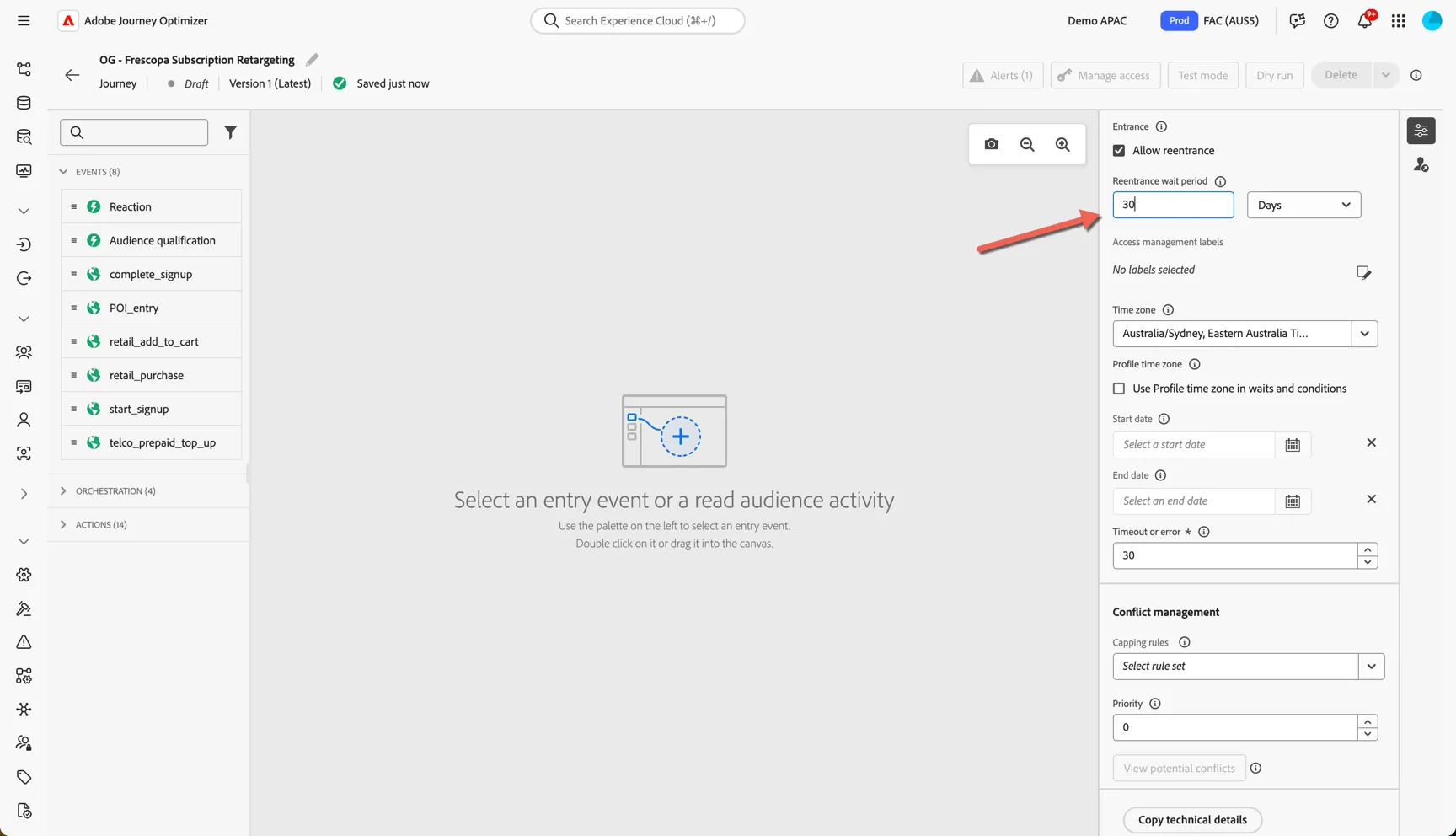
Click to save the properties.
Journeys can be triggered from individual events or when a customer enters or exits a streaming audience.
Select the Read Audience activity into the panel as your journey trigger.
Select the audience you have created earlier for Non Luma+ members or use "Luma - Not Luma+ Members" if you have not created your own audience.
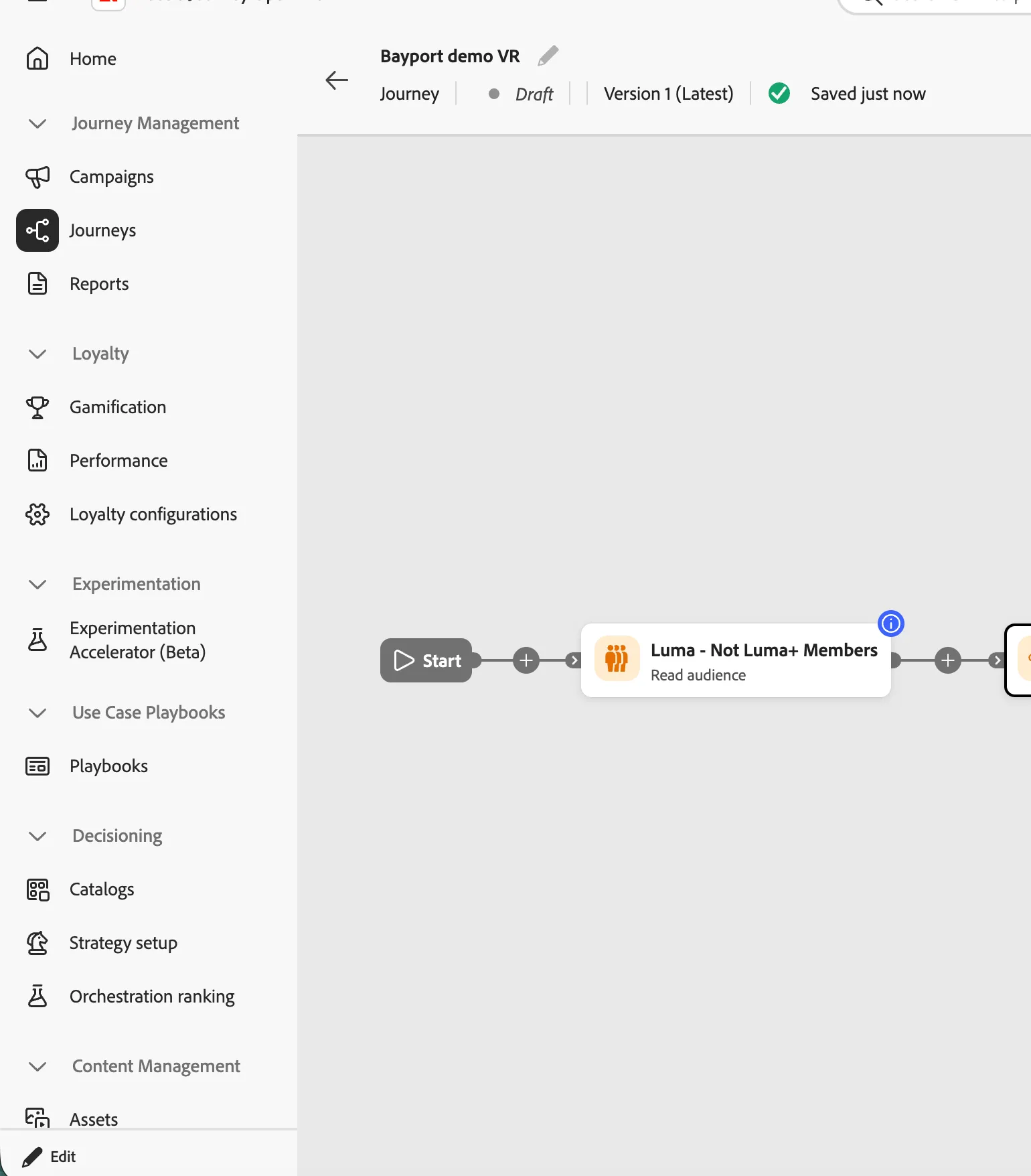
- Now add Optimize from Orchestration group as the next step
- In Optimize settings , select Data source condition as method
-
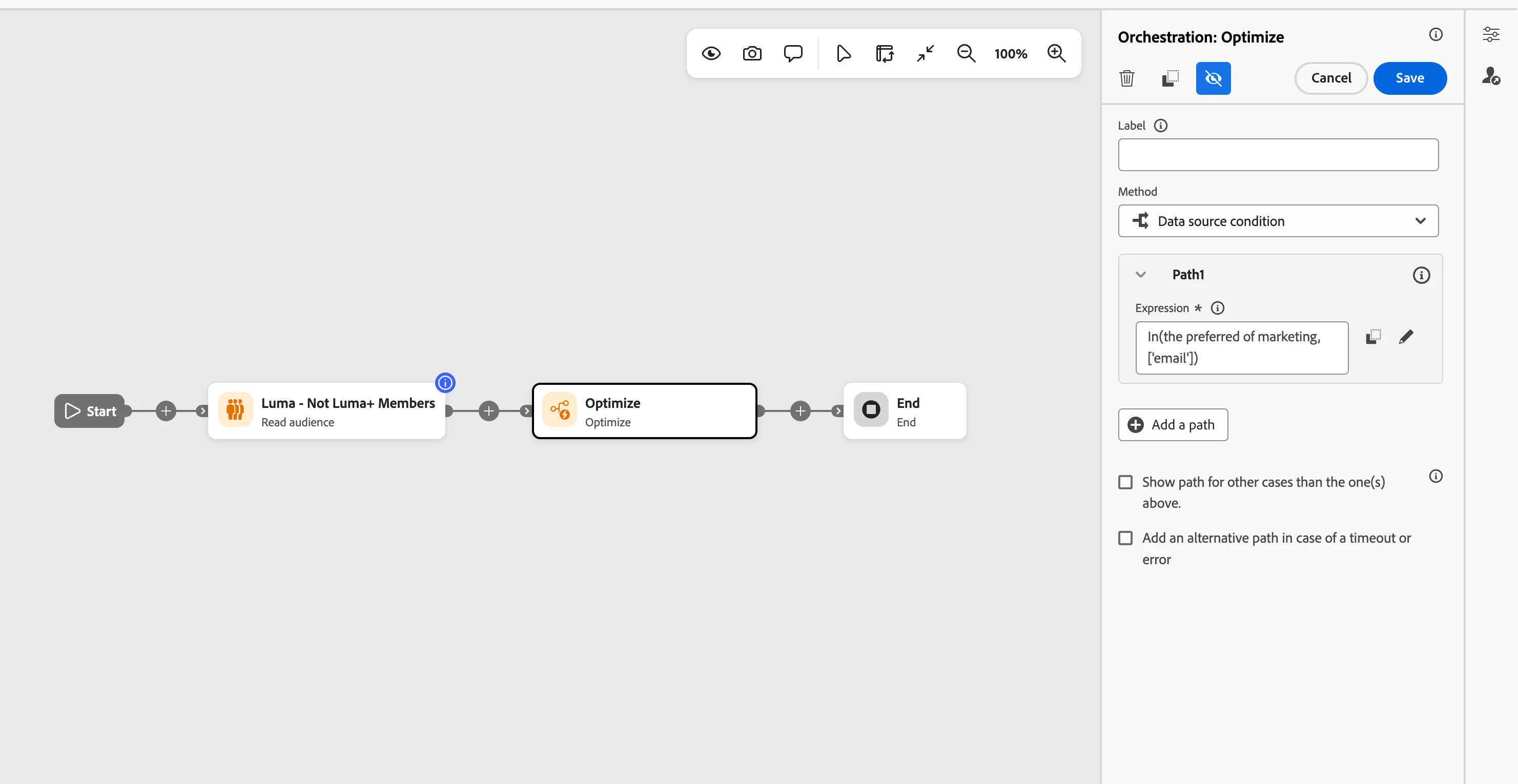
- Label the Path with email
- Click on the pencil
- Search for Preferred Channel
- From the Context Folder Under Experience Platform > QuickSetup_ProfileFieldGroup > profile > Consents and Preferences > Marketing Preferences > Preferred Channel is equal to "email
- Click Ok.
- Click Save.
- Click Add a Path
- Follow the step above for the Preferred Channel for SMS and Push
-
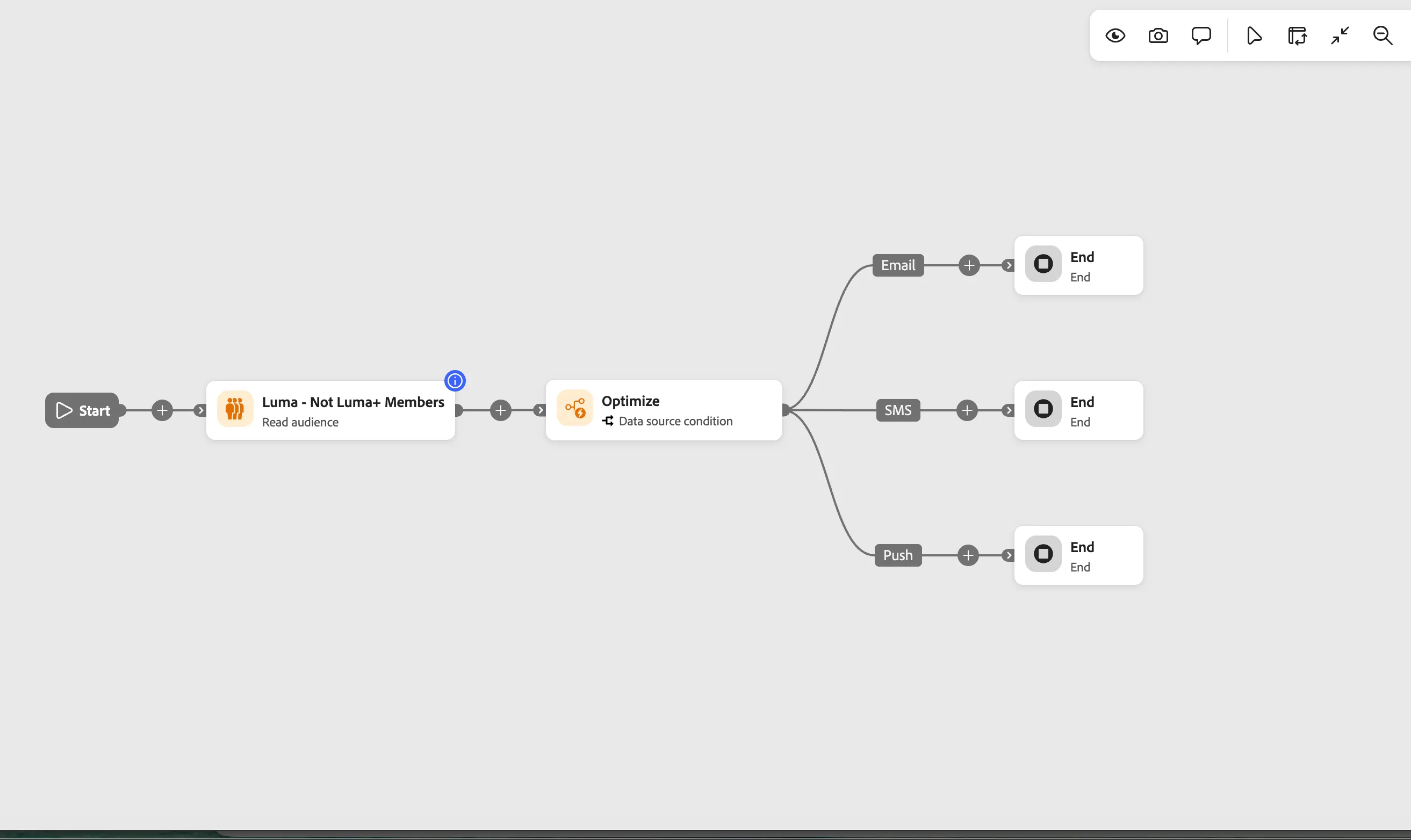
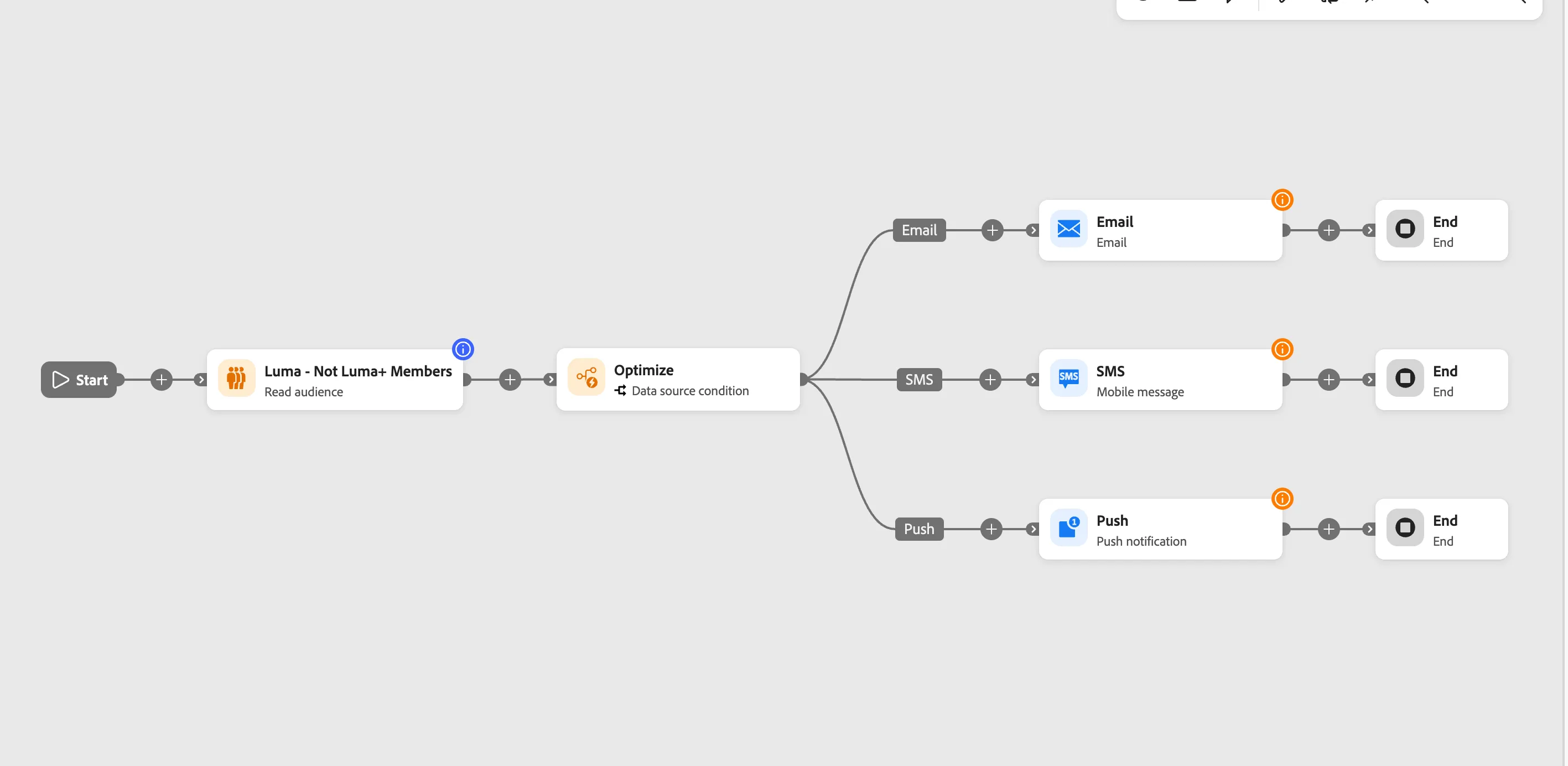
- From Actions, find, drag and drop the Action onto the Email path and chose email
- Label the node with Email
- From Actions, find, drag and drop the Action onto the SMS path and chose SMS
- Label the node with SMS
- From Actions, find, drag and drop the Action onto the Push path and chose Push
- Label the node with Push
Your Journey should look like (With a few warnings on the Actions):
We now need to set up the content for each of those messages in the next exercise