Attribution
In most cases people think of measuring the influence of marketing touches on driving conversions when talking about attribution. Attribution IQ supports this use case very well, but it can also be used for many other use cases. When used in CJA we can measure the influence that any data point has on driving an event of interest, for example, measure the influence of each student rep on driving applications.
In this exercise we will use CJA to understand how your marketing channels (Email, Facebook, etc) impact not only your online actions such as event registrations, but also offline actions like whether or not they actually attended the event they registered for. Attendance is likely recorded in person at the event and ingested separately from traditional web data. These events are not directly linked (several days or even weeks can pass between a marketing campaign and an event), so we need to be able to control the attribution method depending on the use case.
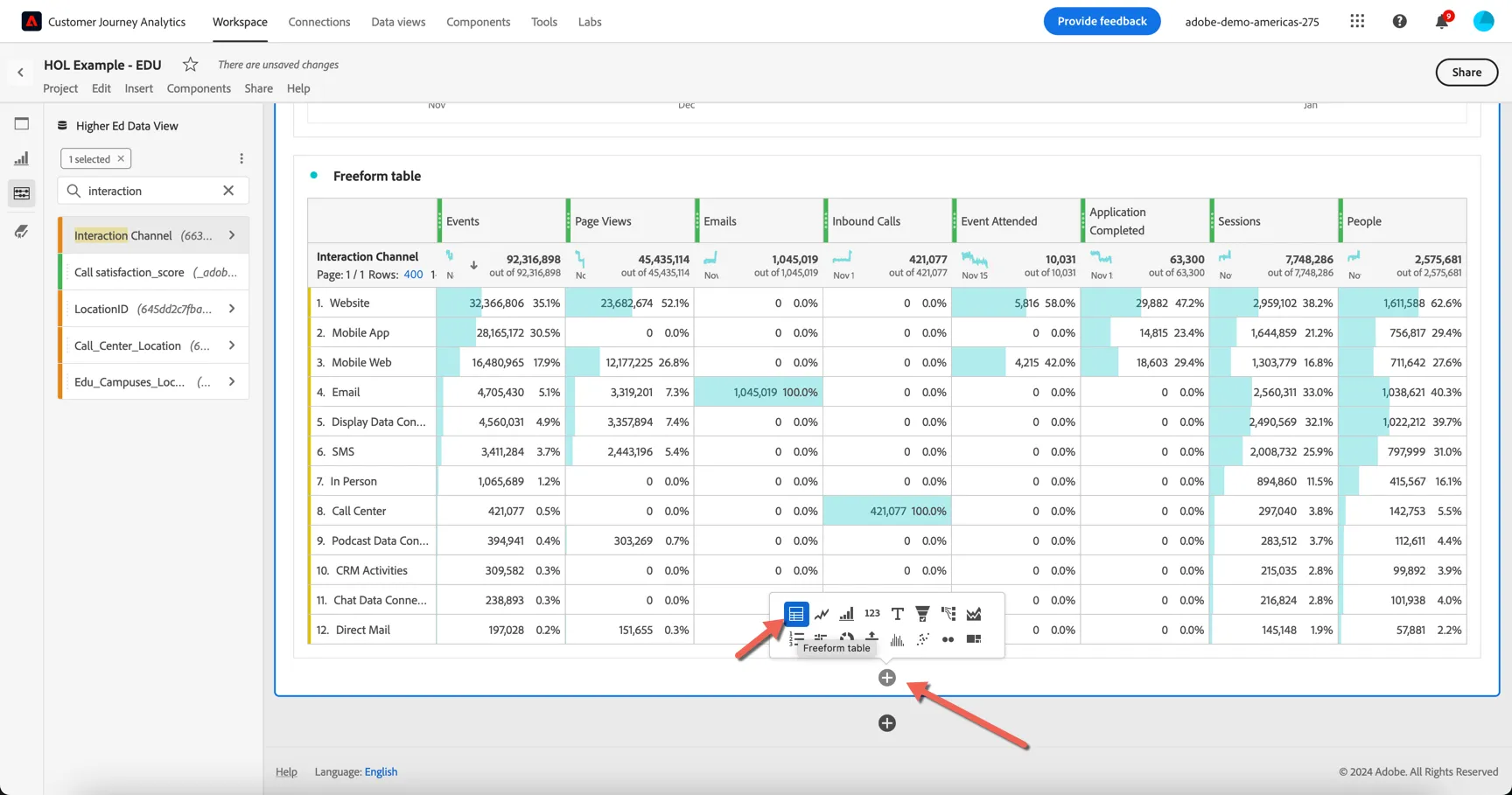
1. Add a new freeform table to our dashboard by clicking the + icon at the bottom of our dashboard.
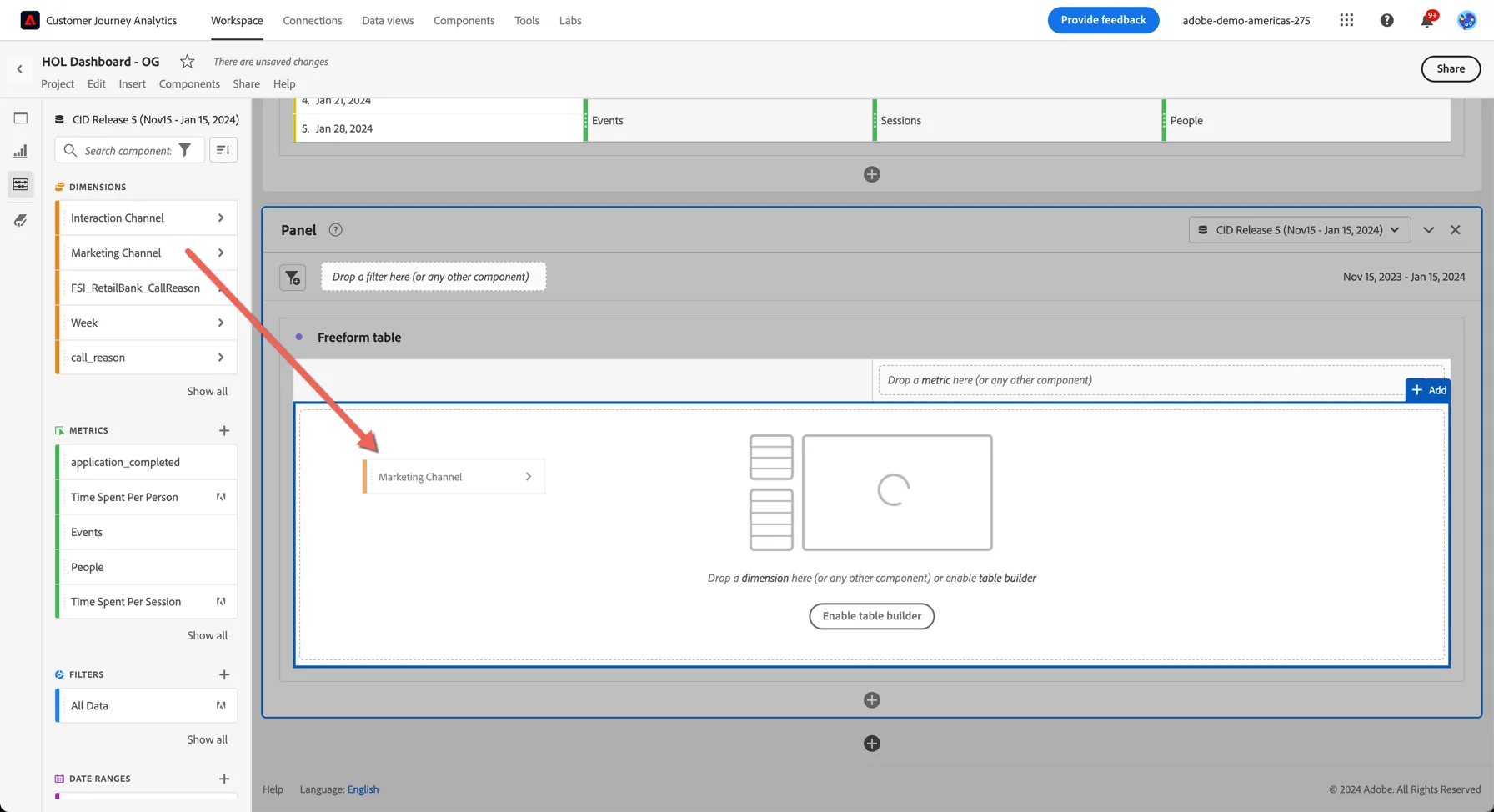
3. Add the dimension Marketing Channel to your freeform.
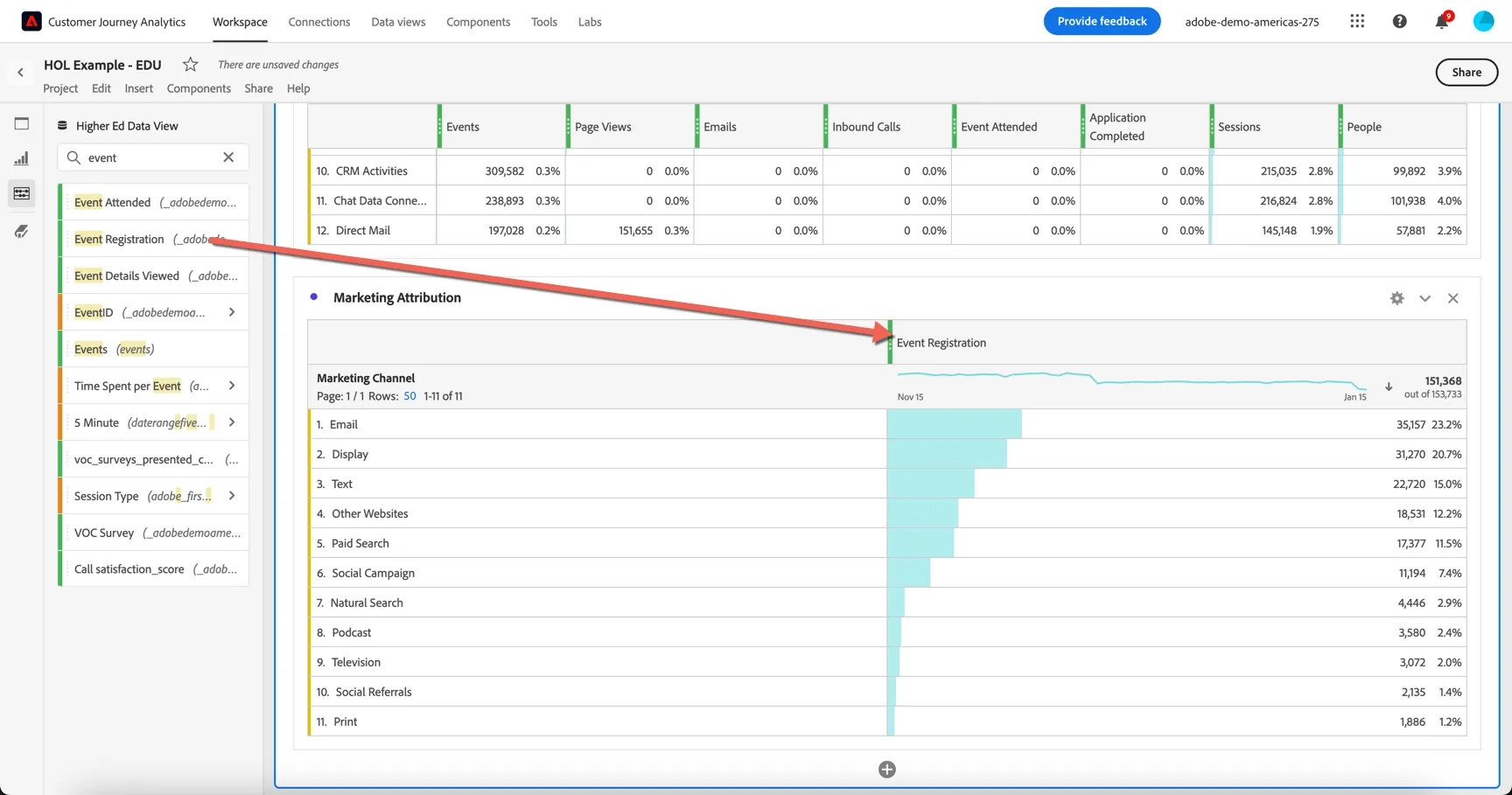
4. Now take the Event Registration metric and replace the default events metric in your freeform.
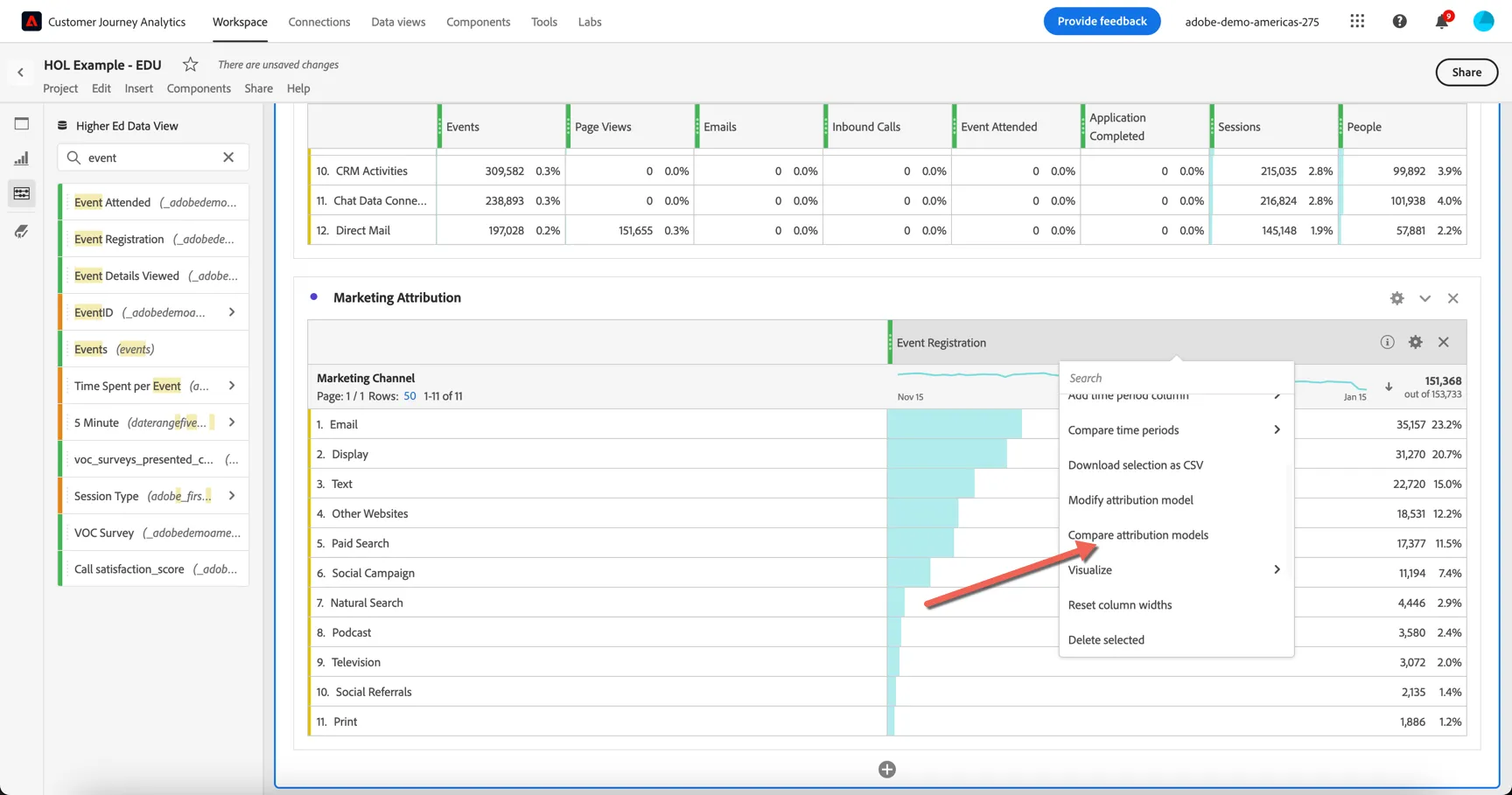
5. By default the attribution model used for registrations is last touch, but what if your prospect saw multiple campaigns across multiple channels. Let's compare what attribution would look like if we use Adobe's Algorithmic modelling. Right click on the column heading and select to Compare Attribution Models.
6. Change the model to use Algorithmic with a 14 day lookback window.
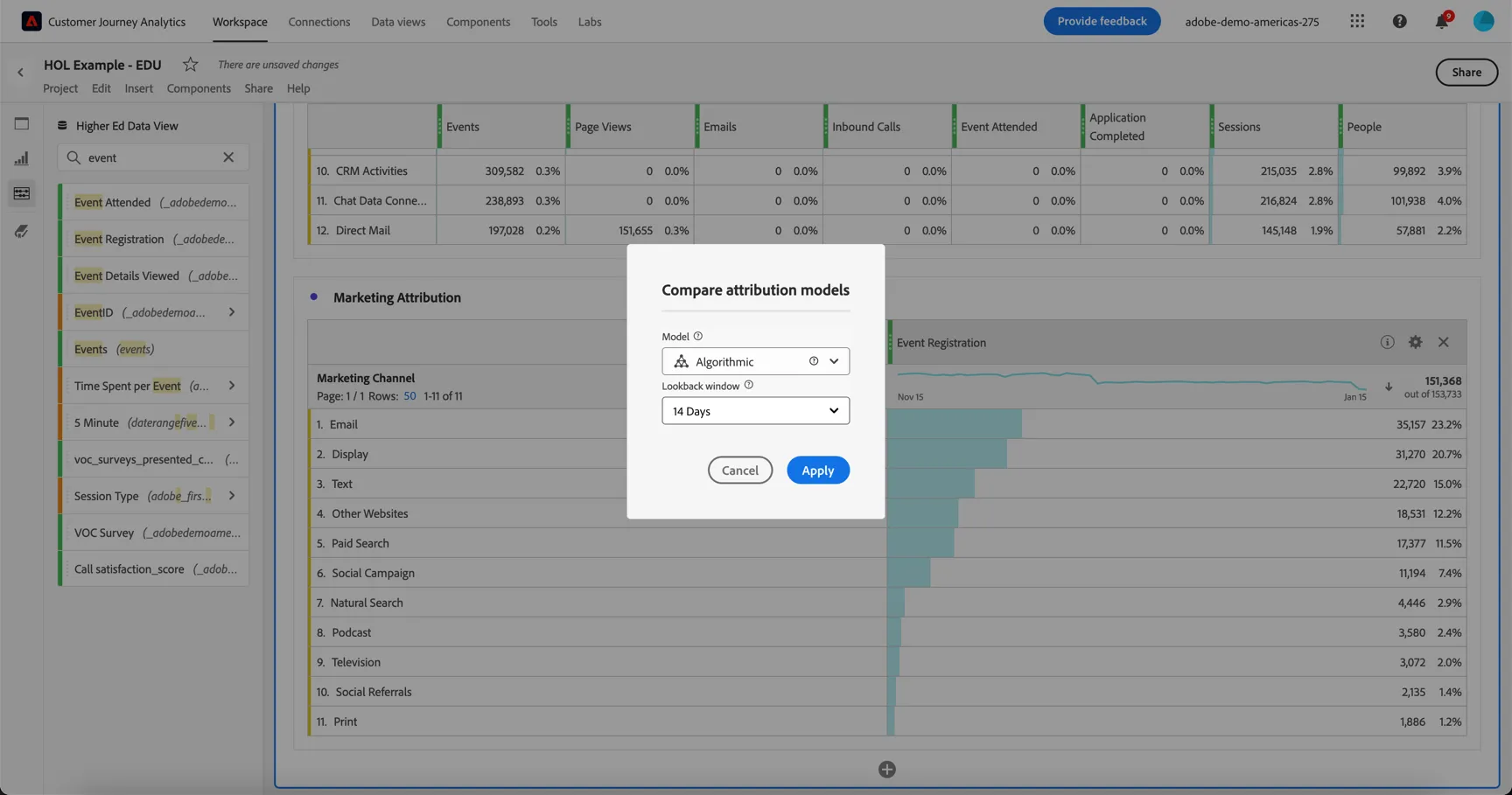
7. We can see that the attribution per channel is distributed differently when considering multiple touchpoints.
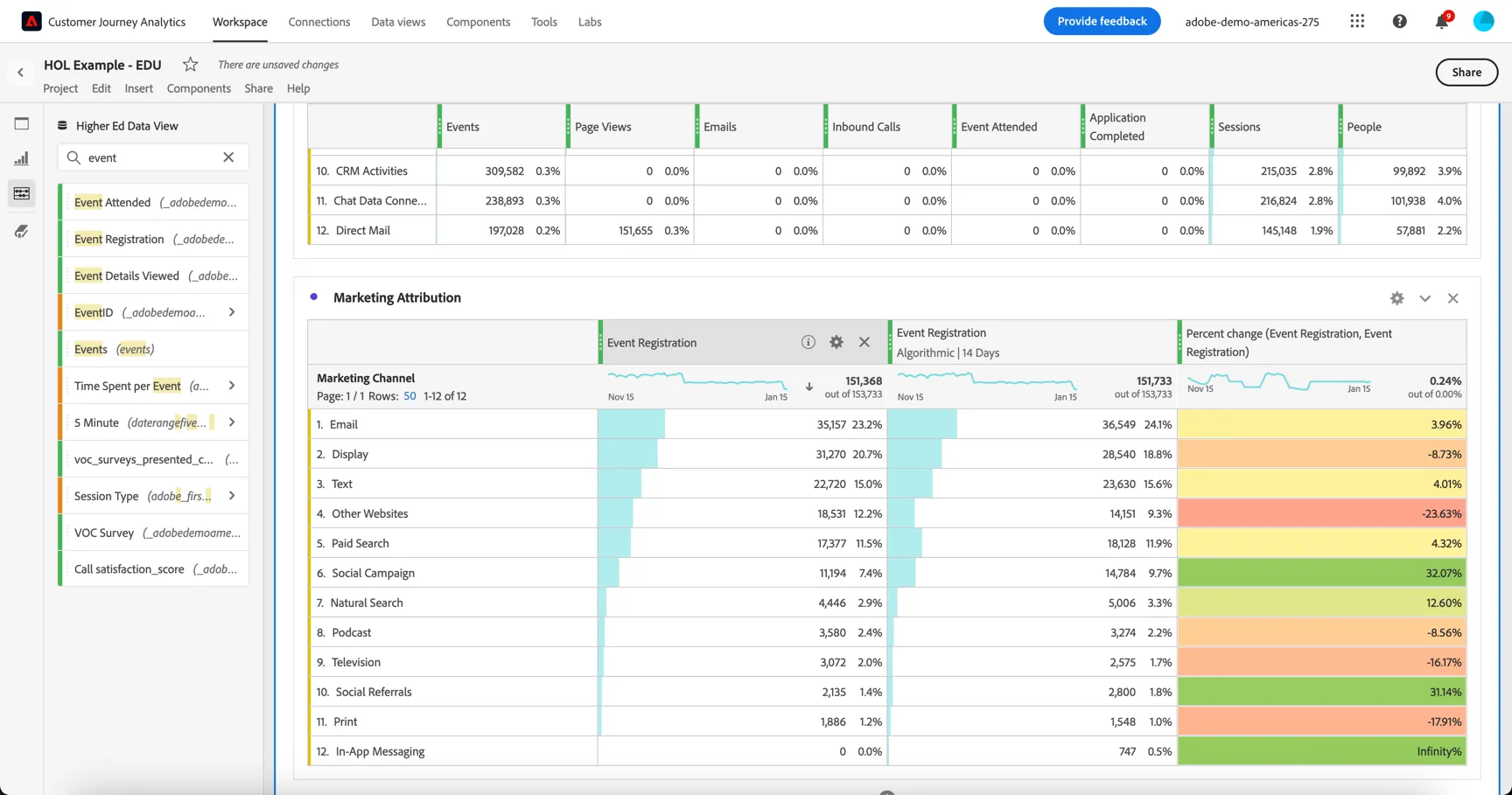
We can see now that multiple marketing channels have been influencing online registrations for open day. We can use the same process to understand the influence campaigns are having on offline interactions as well, for example inbound calls, each action may need it's own attribution settings depending on the expected context for that interaction. Providing a more wholistic picture of the impact your marketing actions are having.
Congratulations, this completes the exercise on Attribution