Relational-based Schema

Relational Schemas
A Relational-based schema is the formal definition of the model-based data model.
It specifies:
- The set of tables
- The columns in each table
- The constraints
- The relationships across tables
Organizing schemas or tables in a model-based data model is about structuring your data into multiple tables. Ensure each table stores one type of entity/schemas.
There are 2 ways to create a Relational-based schema. We will only cover the fastest way which is using a DDL file. If you are interested on how to create manually, then visit this page. Otherwise, check the steps below to see how straight forward it is from a Data Management perspective.
Custom Objects
With Relational Schemas you are able to create Custom Objects that supports one-to-many (1:M) relationships. You can use these custom objects in segmentation and Query Service use cases. For example, you can model custom CRM objects, track product entitlements and purchases, and manage customer offers.
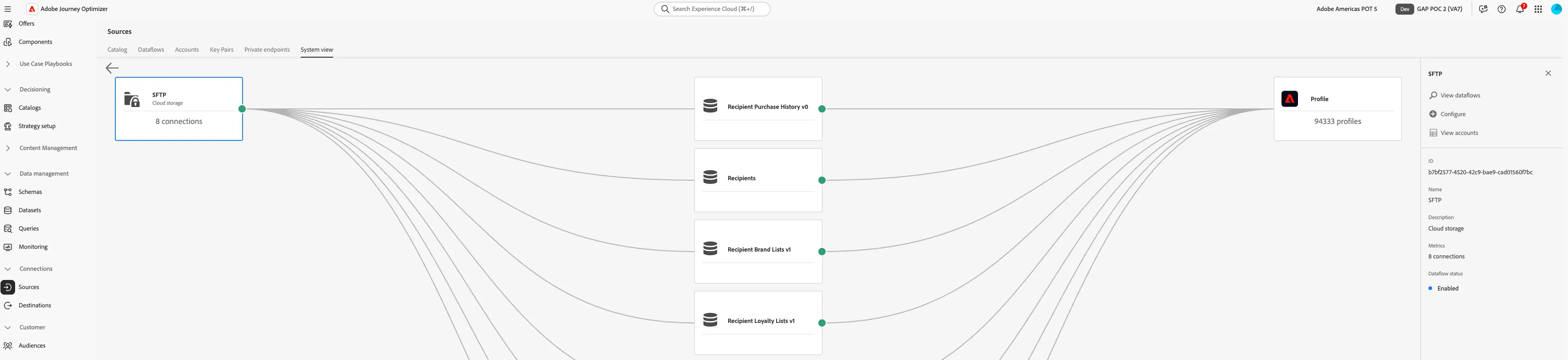
Sources That Support Relational Schemas
The following Sources are supported for use with Orchestrated campaigns:
Type | Source |
|---|---|
Cloud Storage | |
| |
| SFTP |
| |
Cloud Data Warehouses | |
| |
| |
| |
| |
File-Based Uploads |