Analyse ancillary purchase behaviour
Reminder!
Data may have changed and Coworker can interpret requests differently sometimes, so don't panic if your results do not match exactly what you see in this guide. Take your time to read and understand the results.
WKND’s marketing team wants more travellers to buy ancillaries online before they reach the airport, helping reduce queues at the airport desk.
Your task: Use Coworker to compare how often and how much travellers buy in advance online versus at the airport. Identify their purchasing patterns and estimate the opportunity to shift more purchases online.
Prompt sequence
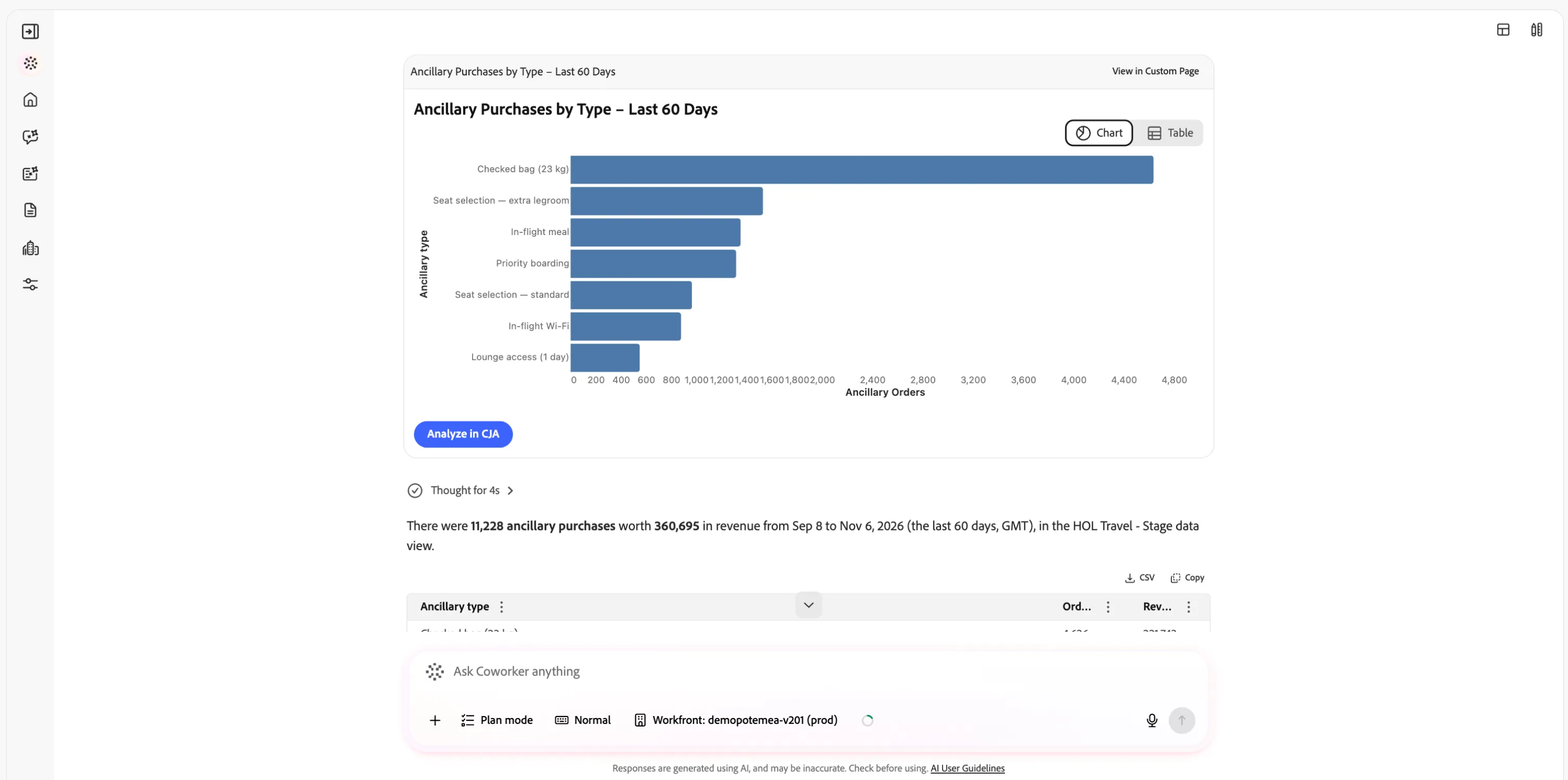
Let's start by getting the lay of the land.
Expected outcome: a breakdown of ancillary purchase volume by type, giving you a feel for what WKND customers are buying.
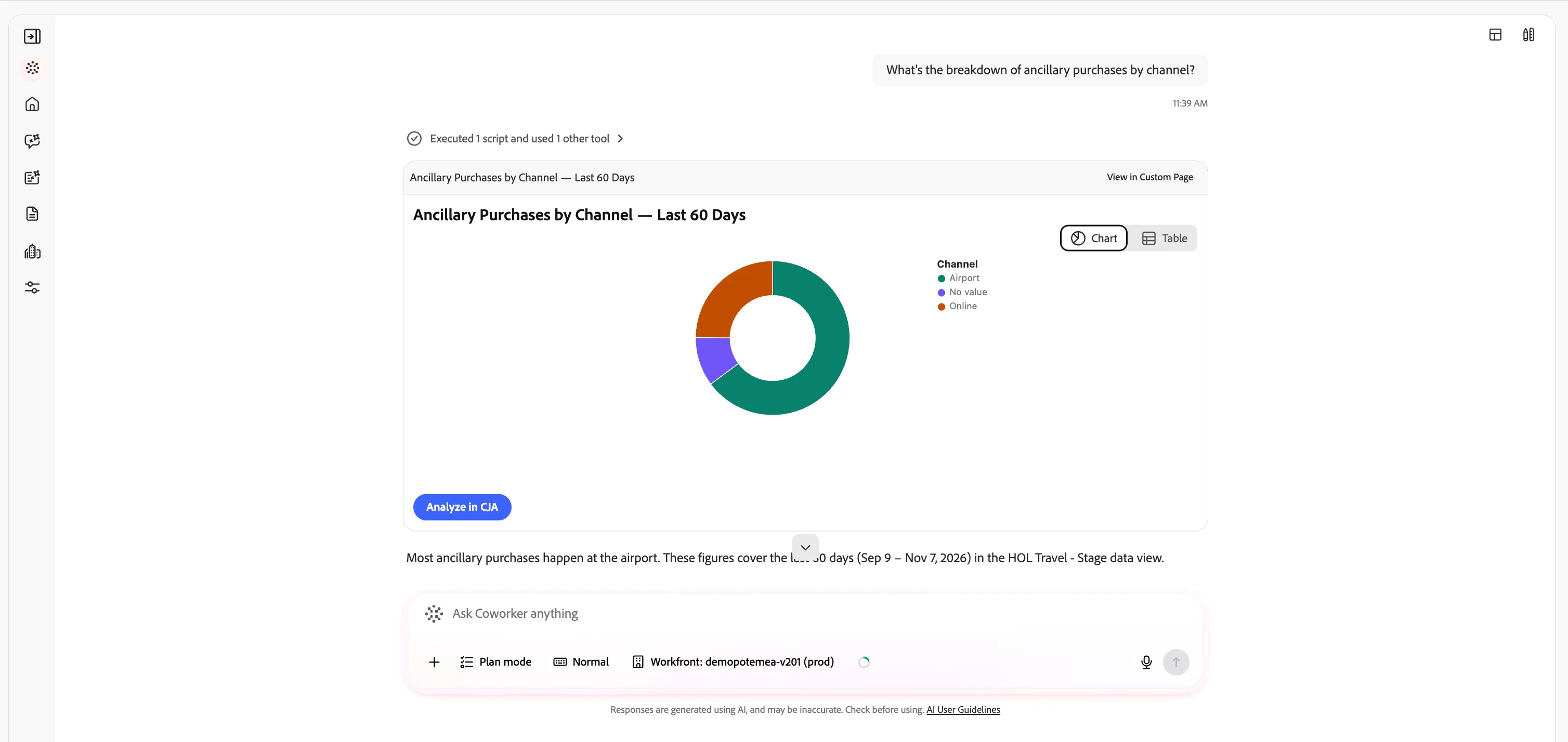
Now let's introduce the dimension that matters for this analysis: where ancillaries are purchased.
Expected outcome: the split of purchases between online and at the airport.
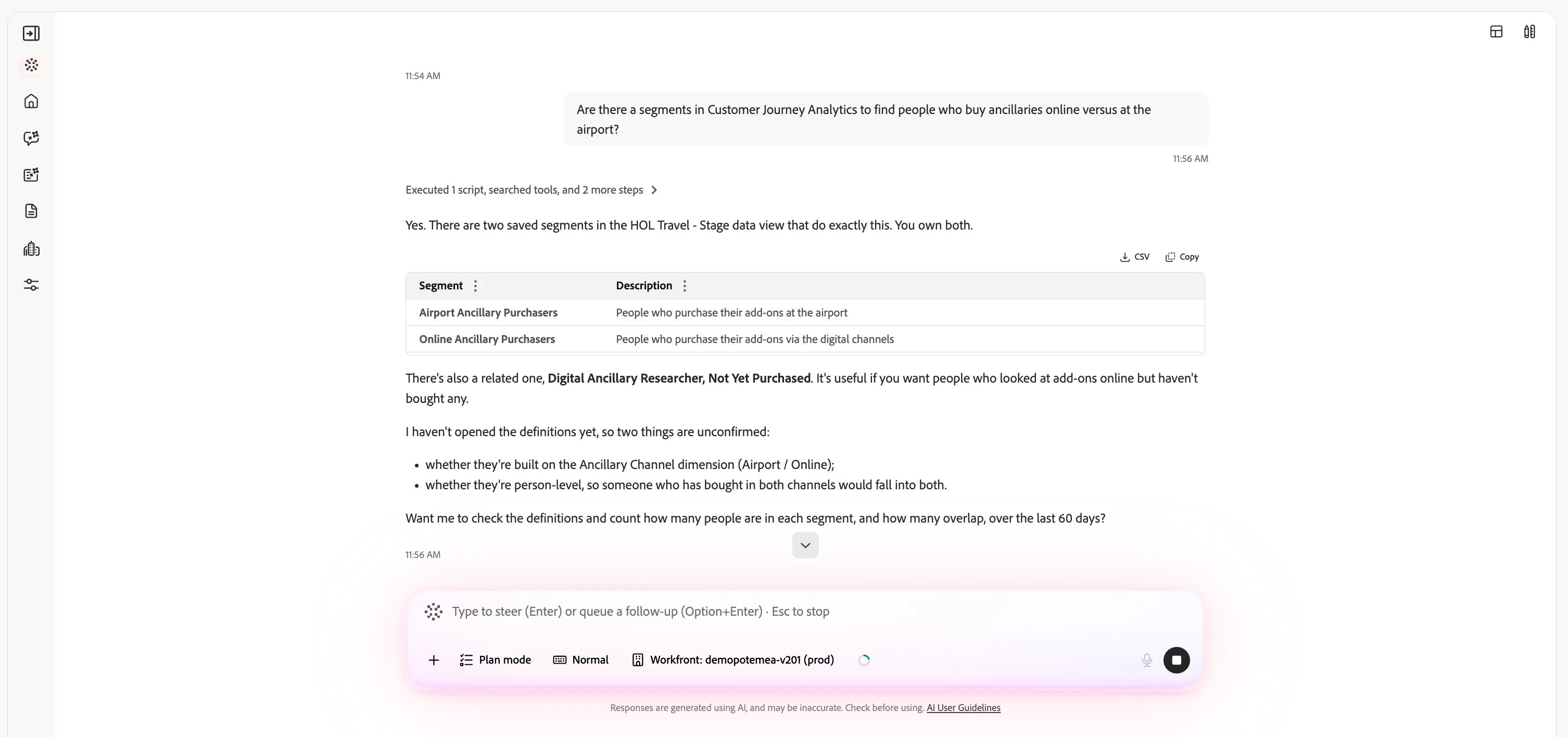
WKND already maintains segments for these two groups. Let's have Coworker find them.
Expected outcome: Coworker surfaces the two existing audiences, "Online Ancillary Purchasers" and "Airport Ancillary Purchasers".
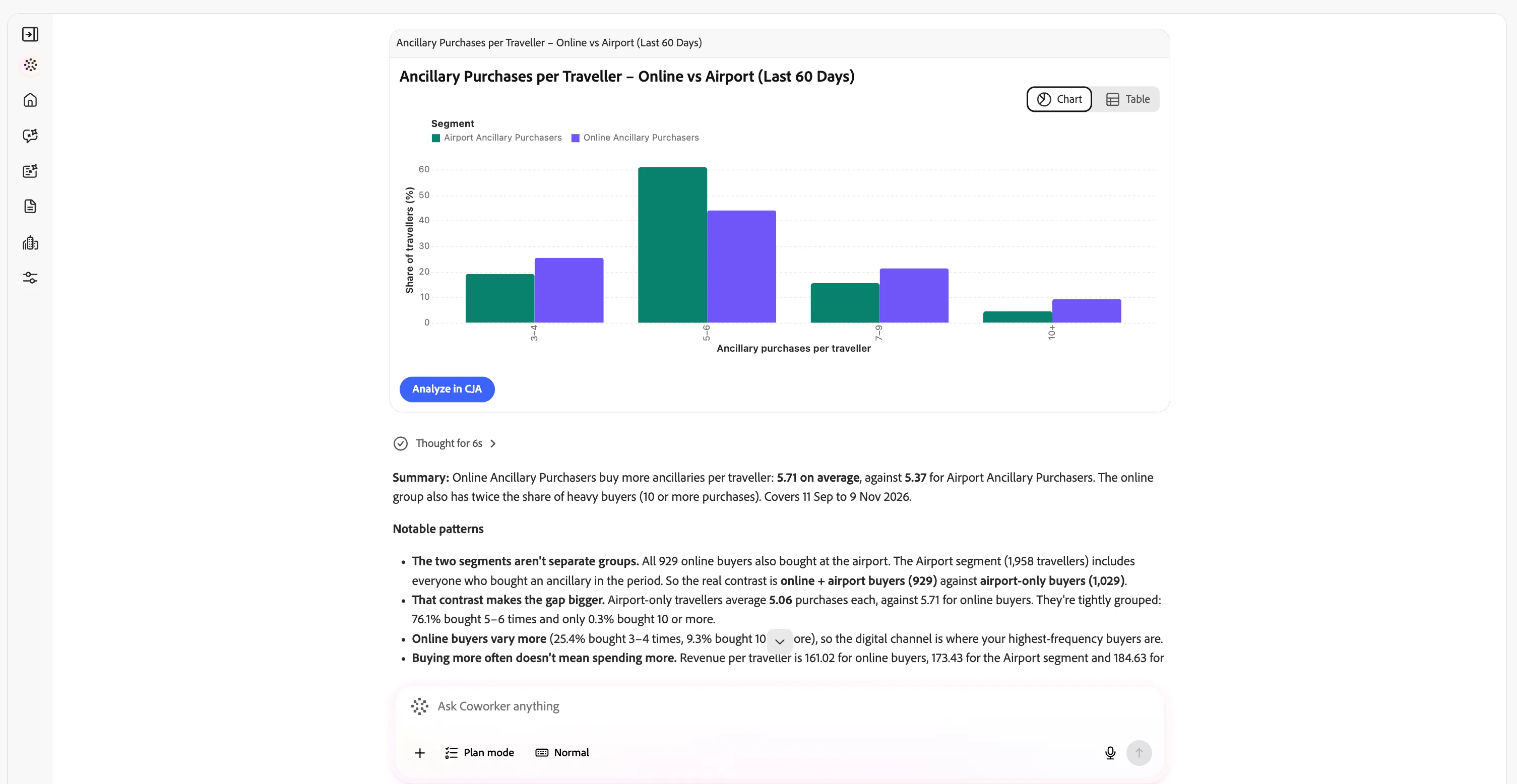
Now the core comparison.
Analyze ancillary purchases over the last 60 days for the "Online Ancillary Purchasers" and "Airport Ancillary Purchasers" segments.
For each segment, calculate the number of ancillary purchases per traveller within the 60-day window (for example the distribution of 0, 1, 2, 3+ purchases). Compare the two segments to identify which one shows higher ancillary purchasing.
Output required:
- A short written summary explaining which segment buys more ancillaries and any notable pattern.
- A table showing the distribution of purchase counts per traveller, per segment.
- A chart comparing the distribution between the two segments.
Expected outcome: A written summary, a table, and a chart showing the distribution of purchase counts per customer (0, 1, 2, 3+) for each segment.
One way WKND encourage travellers to purchase ancillaries in advance is to add personalised ancillary offers in the upcoming flight email.
In the following exercises you'll orchestrate a series of communications to these customers with upcoming travel - including targeted ancillary offers.
You'll start by building the audience for that journey.