Build the audience
To improve the pre-flight experience, WKND wants to reach customers with an upcoming trip - in the window two weeks before their flight. You'll build the audience that feeds that journey.
Create the audience
Follow Coworker's guidance through field discovery, definition building, size estimation and creation - respond yes/validate when required, and ignore any data warnings.
User approval is required before Coworker can run specific actions. When prompted, grant Coworker permission to proceed.

Expected outcome: a new audience created and named as specified.
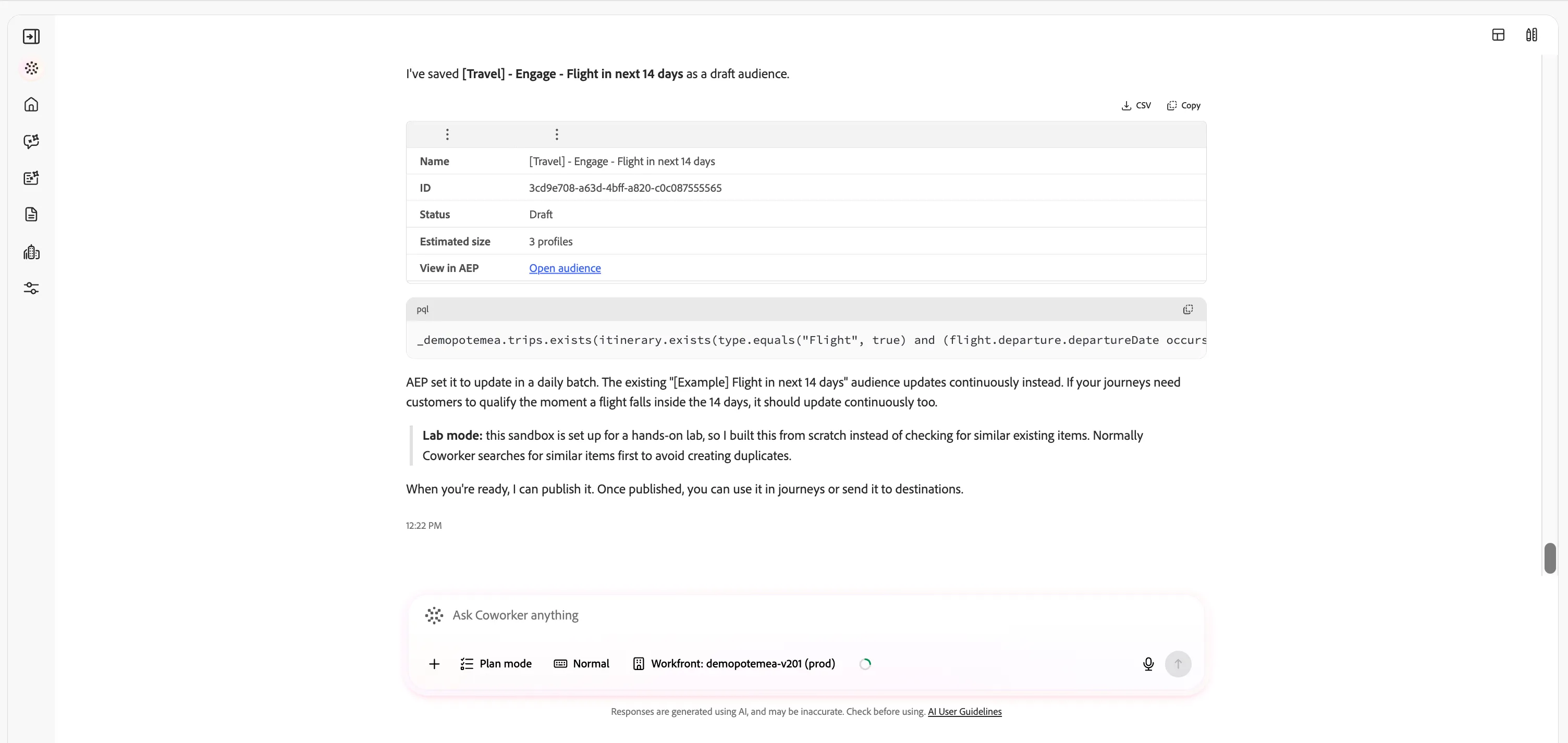
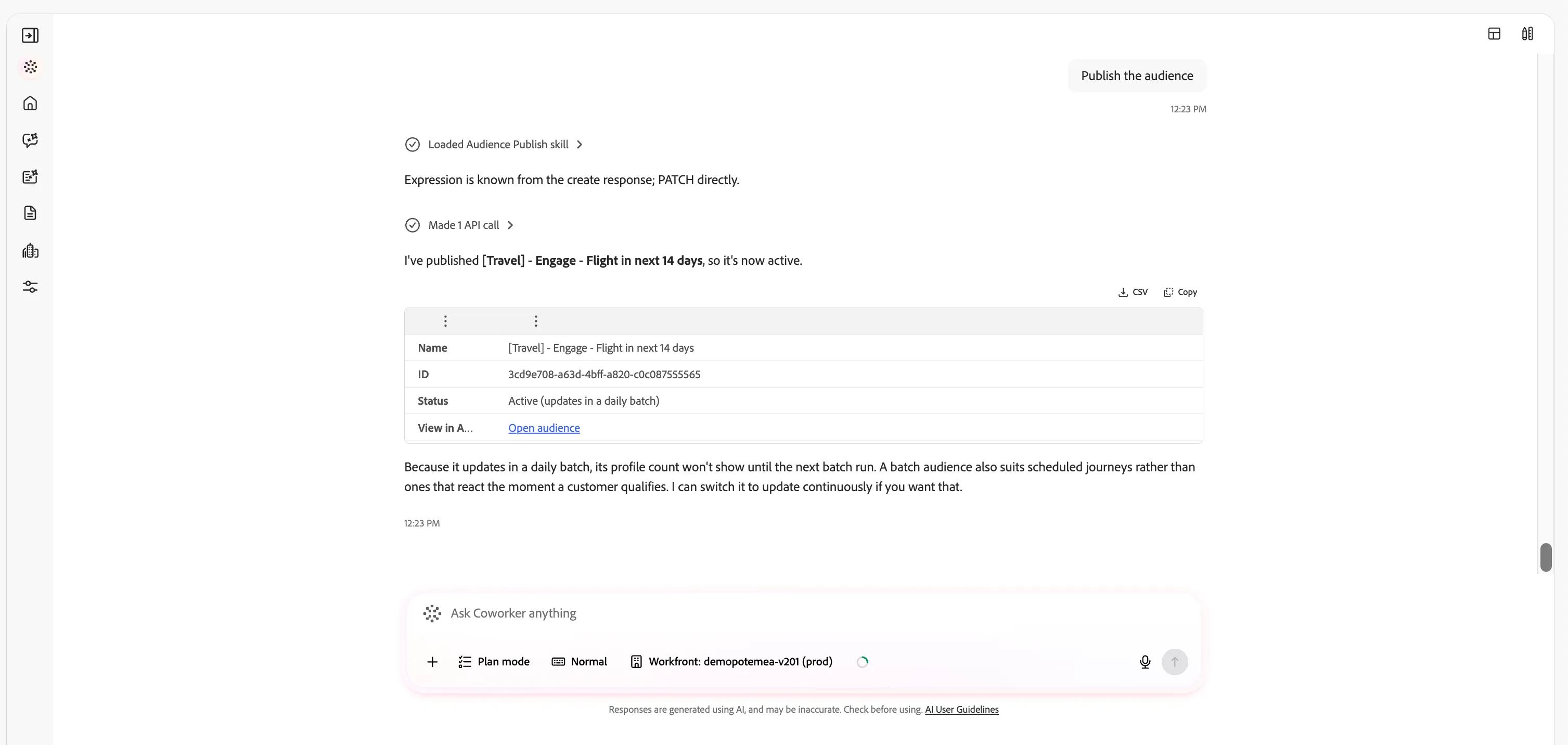
Before you can activate or use the audience, it needs to be published. You have two options:
- Via the UI: open the audience from the link Coworker provides, review its structure in the interface to confirm the definition is what you expected, then publish it.
- Via Coworker: ask Coworker to publish it for you directly.
Expected outcome: the audience is published and ready for activation.
WKND wants to target these customers with ancillary offers not only via the "Upcoming flight" email, but also via paid social channels, in this case Facebook.
Let's ask Coworker to target travellers with an upcoming booking on paid social until their trip departure date.
Expected outcome: there is no Meta Destination connection in this sandbox, so Coworker attempts to create one - but the setup requires an interactive login it cannot complete on its own. Instead of failing silently, Coworker explains the limitation and proposes opening a Jira ticket to ask the Social team to configure the connection. Because you installed the lab skills, Coworker can create that ticket for you. Approve it when prompted.
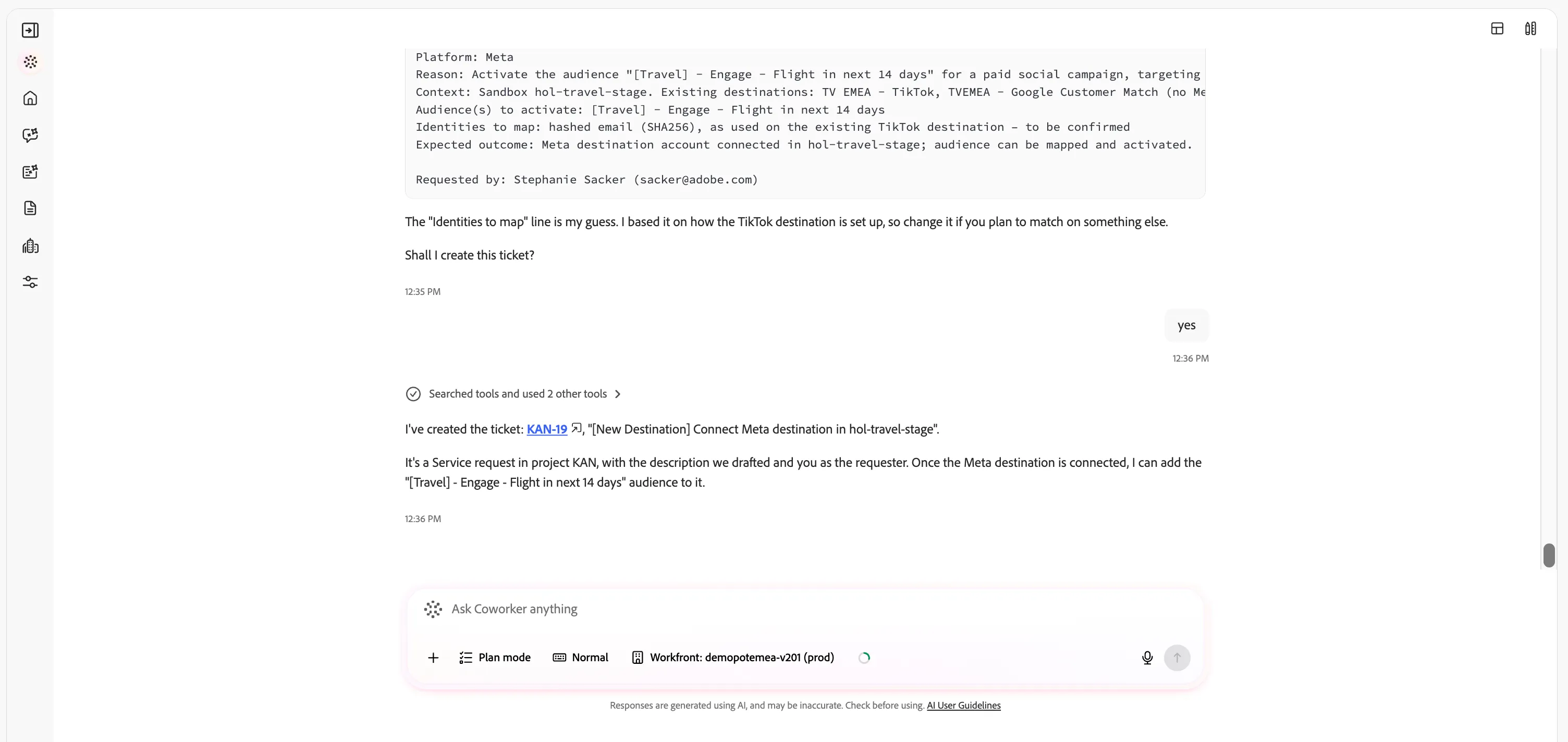
This is a good example of Coworker's extensibility. When it hits a capability it can't complete itself - here, an authentication step only a human can do - it doesn't dead-end. It routes the request into the systems your organization already uses (Jira) so the right team can pick it up.
You've built the audience and handed off the destination setup through Jira. Next, you'll build the journey that uses this audience.